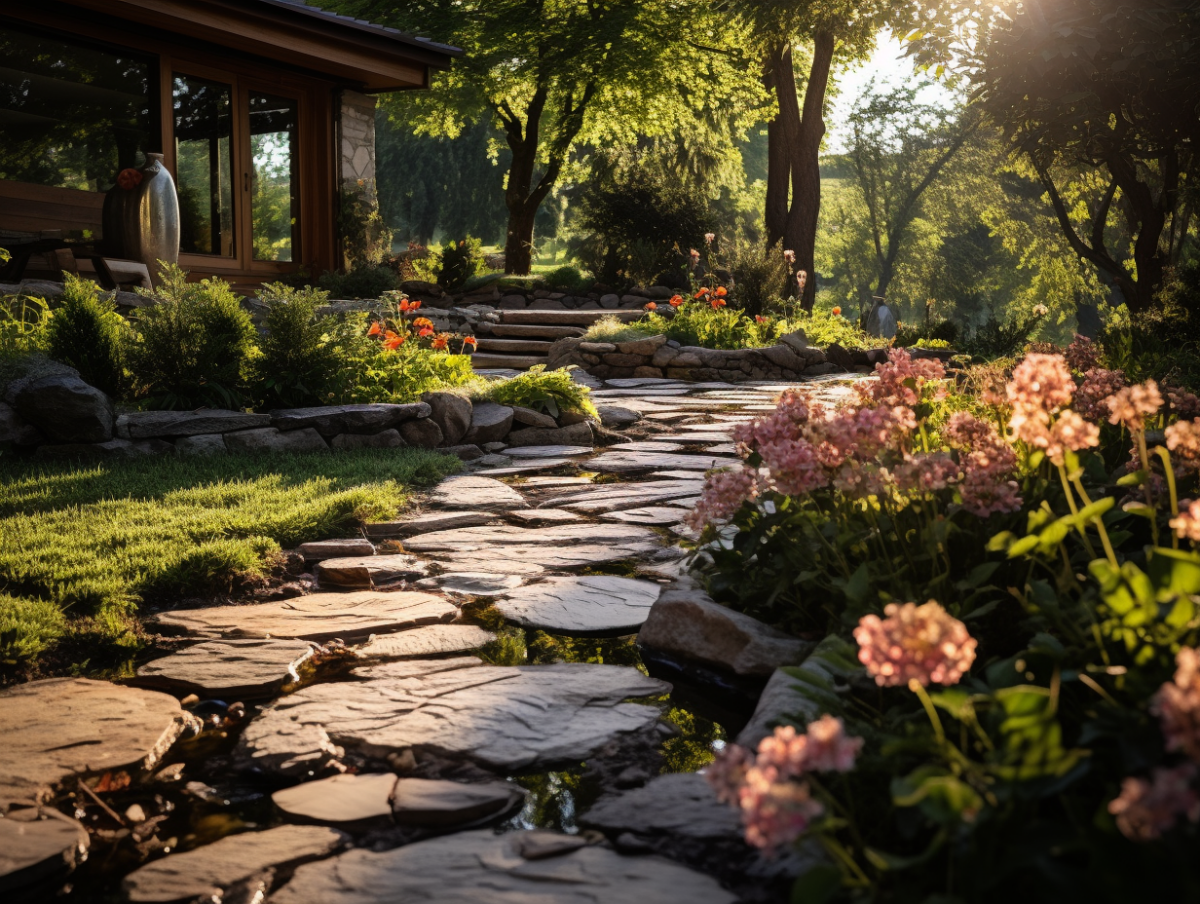
Creating a low-maintenance garden is the aspiration of many homeowners who dream of a green space without the constraints of rigorous upkeep. The idea is to design an outdoor area that harmonizes with the local ecosystem while minimizing gardening work. This involves choosing resilient plants suited to the climate, favoring ground covers over demanding lawns, and opting for efficient watering systems. Such a garden becomes a refuge for biodiversity while providing a calming environment for its owners.
The basic principles for a low-maintenance garden
Designing a garden that doesn’t require mowing, pruning, weeding, and daily watering is the challenge that permaculture takes on, this gardening approach that significantly reduces maintenance. Spot Jardin, as a concept, embodies this aspiration for self-sufficiency and sustainability. Permaculture is not just a technique; it’s a philosophy that invites us to rethink our relationship with nature. It relies on an intelligent garden design, where each element plays a specific role and fits into a virtuous cycle, where one’s waste becomes another’s resource.
Biodiversity, this indicator of an ecosystem’s health, is promoted by gardening techniques that aim to be environmentally friendly and foster natural balance. Indeed, a garden that embraces the diversity of plant and animal species is a garden that better defends itself against pests and diseases, thus reducing the need for human intervention. This involves creating habitats for beneficial insects, such as bees and ladybugs, which contribute to the natural upkeep of the garden by pollinating plants and regulating pest populations.
Permaculture is a concrete response to the challenges of our time: it allows for the design of gardens that are not only beautiful and productive but also in harmony with our ecosystem. It is no coincidence that this approach is increasingly resonating with amateur and professional gardeners alike. It offers practical solutions for a low-maintenance garden while enriching the soil and preserving natural resources. Take the time to learn its principles and apply them; your garden will be transformed, and so will you.
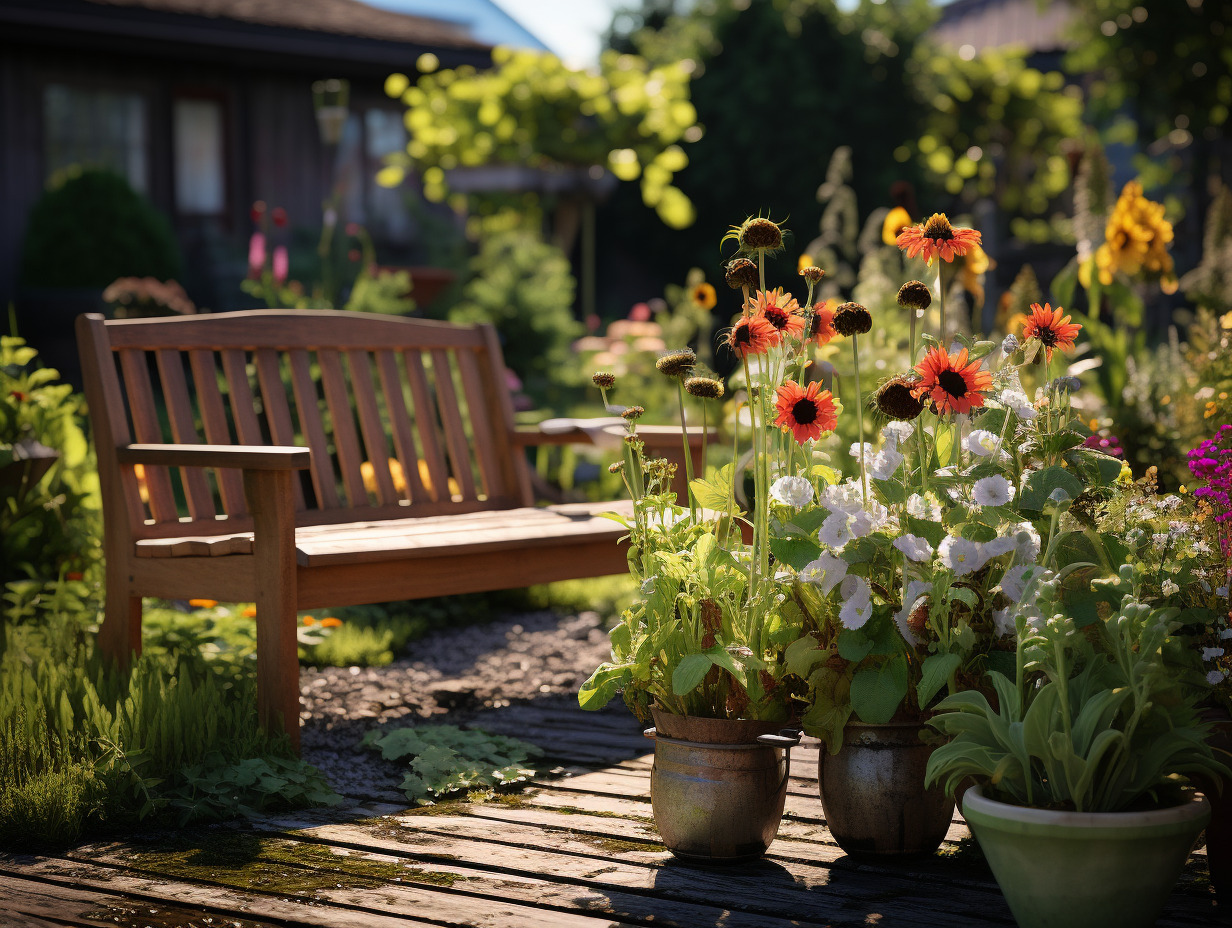
Choosing plants and layouts to reduce care
Favor perennials for their remarkable ability to come back year after year without major intervention. Pierre-Adrien Lagneau, head gardener and expert at Truffaut, strongly recommends the use of these robust plants that form the backbone of a perennial garden. They require little care once well established and help structure the garden in all seasons. Perennials come in a multitude of colors, shapes, and textures, offering a diversity that delights the eye while simplifying maintenance.
Opt for a wildflower meadow rather than a traditional lawn, advises Nicolas Moingeon, co-founder of the Morvant&Moingeon agency. This ecological alternative reduces the need for frequent mowing and promotes dynamic biodiversity. The wildflower meadow attracts a variety of beneficial insects, such as bees and ladybugs, which actively participate in the natural balance of the garden. In addition to contributing to pollination, these natural allies help regulate pest insect populations, thus reducing the need for chemical interventions.
In terms of watering, the drip irrigation system proves to be a wise choice for new plantings. It delivers water directly to the roots, minimizing evaporation and water consumption. Truffaut offers solutions tailored to this type of irrigation, allowing for minimal maintenance and maximum efficiency. Such a system contributes not only to water conservation but also to plant health, avoiding excess moisture that can lead to fungal diseases.