
The online fashion shopping market in France is no longer just a simple transposition of physical store shelves onto a screen. The rise of second-hand goods, new European regulations on unsold textiles, and the evolution of return policies are reshaping shopping habits. Between peer-to-peer platforms, direct resale by brands, and traditional e-shops, the channels are multiplying, although reliability does not always keep pace.
Online Second-Hand: A Growing Segment That Hasn’t Yet Replaced New
The second-hand market for clothing, shoes, and home textiles has grown in volume and value in France in recent years, a fundamental trend confirmed by Refashion data.
This figure deserves some perspective. The share of second-hand remains minority in total textile consumption. Presenting second-hand as the new standard for shopping would be premature.
Refashion specifies that the environmental benefit of reuse is based on the assumption that the second-hand item replaces a new purchase. Buying second-hand in addition to regular purchases does not reduce the textile footprint. For the ecological argument to hold, there must be a real trade-off in one’s basket, not just an addition.
The fastest-growing segment in 2025 is the resale by the brands themselves, distinct from peer-to-peer platforms. Several brands now offer their own second-hand items, with quality control and a more structured shopping experience. For buyers, checking a review on Concentré De Mode shopping allows them to compare these different channels before placing an order.
Return Policies and Transparency: What’s Changing for Online Clothing Purchases
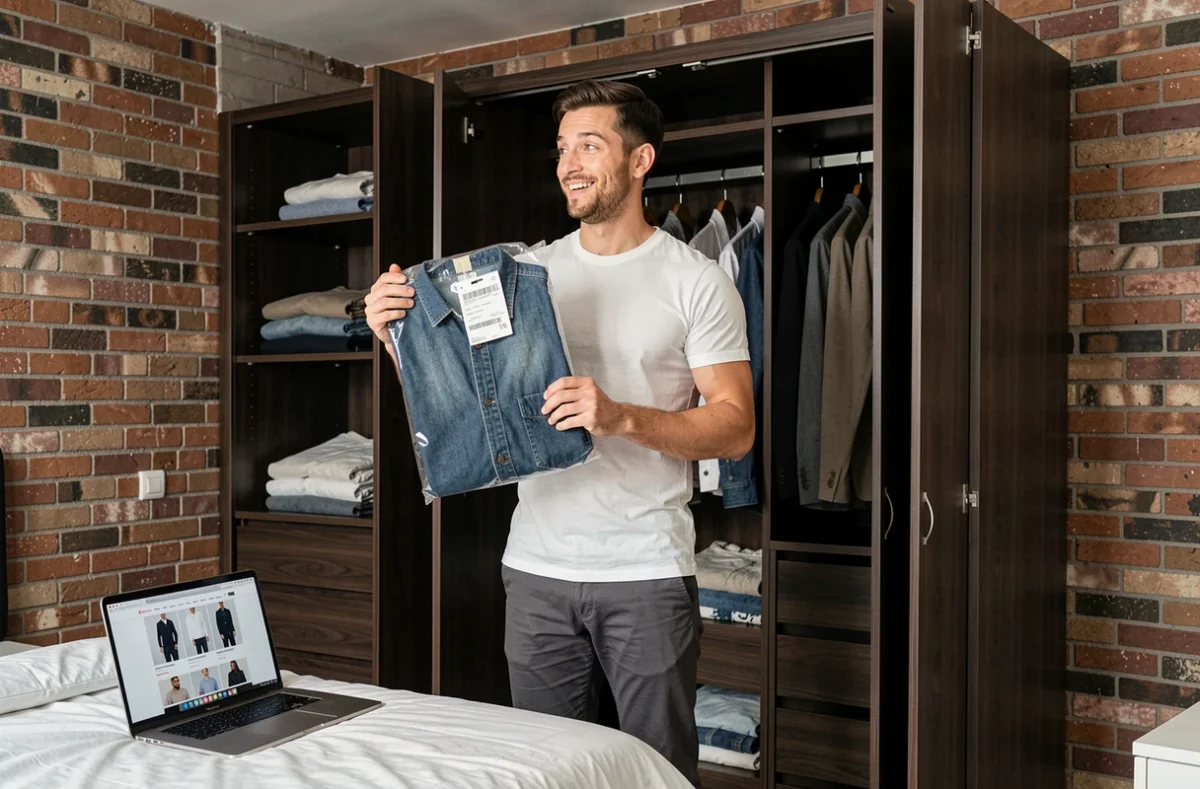
Buying fashion online is based on a promise: being able to try at home what cannot be touched in-store. The return policy then becomes a selection criterion as crucial as price or style.
Practices vary significantly from one store to another. Some brands offer free returns within 30 days, while others charge return fees or reduce the return window to 14 days (the European legal minimum). Checking the return policy before purchasing avoids unexpected costs.
On the regulatory side, European rules on unsold textiles are evolving towards limiting the destruction of unsold items. This constraint pushes brands to better manage their stocks, which can result in adjustments to promotions and size availability. For consumers, the direct consequence is sometimes a reduction in massive sales in favor of more stable prices throughout the year.
Concrete Criteria for Evaluating the Reliability of a Fashion Site
- Presence of verified and recent customer reviews, not just overall ratings without detailed comments
- Complete legal mentions, accessible general terms of sale, and identifiable customer service contact information (address, phone, or chat)
- Explicit return policy from the product page, including the timeframe, any fees, and refund procedures
- Certification by a trusted third party (Trusted Shops or equivalent) with a sufficient review history
These elements do not guarantee a perfect experience, but their absence is a clear warning signal.
Online Fashion Trends: Spotting What Lasts Beyond a Season
Fashion trends circulate faster online than in physical storefronts. A style can saturate social media in a few weeks, then disappear before even reaching traditional stores. Distinguishing a fleeting trend from a lasting movement requires some perspective.

Some markers help to sort through trends. A trend supported by several brands across different ranges (entry-level, mid-range, designers) is more likely to endure than a phenomenon limited to a single brand or social media platform.
Online fashion shopping provides access to a vast volume of items. This abundance can lead to impulsive buying. Building a coherent style requires deliberate choices rather than accumulating trendy pieces.
A Practical Approach for Thoughtful Fashion Purchases
- Define a monthly budget dedicated to clothing and stick to it, including potential shipping and return costs
- Compare the same item across multiple sites before buying; price differences for the same reference can be significant
- Favor materials with clearly indicated compositions on the product sheet (fiber percentages, country of manufacture when mentioned)
A successful online fashion purchase relies on comparison and patience, not on the speed of the click. The best deals are rarely found in the urgency of a flash sale.
Touch, Sizes, and Returns: The Persistent Limits of Online Shopping
Most available advice focuses on time savings, promotions, and a wider selection. These advantages are real. But the online clothing shopping experience remains incomplete on a central point: the feel and drape of the fabric cannot be conveyed through a screen.
Size guides vary from brand to brand, and sometimes from collection to collection within the same brand. Returns represent a logistical and environmental cost that neither platforms nor consumers measure precisely. On this point, public data remains fragmented.
The perceived quality in a studio photo does not always match the actual quality of the product received. Customer reviews with worn photos provide more reliable information than official visuals, provided these reviews are authentic and not filtered by the platform.
Online fashion shopping is maturing, driven by second-hand goods, stricter regulations, and better-informed consumers. The tools for making good purchases exist, and now it is the ability to compare, be patient, and make trade-offs that makes the difference.