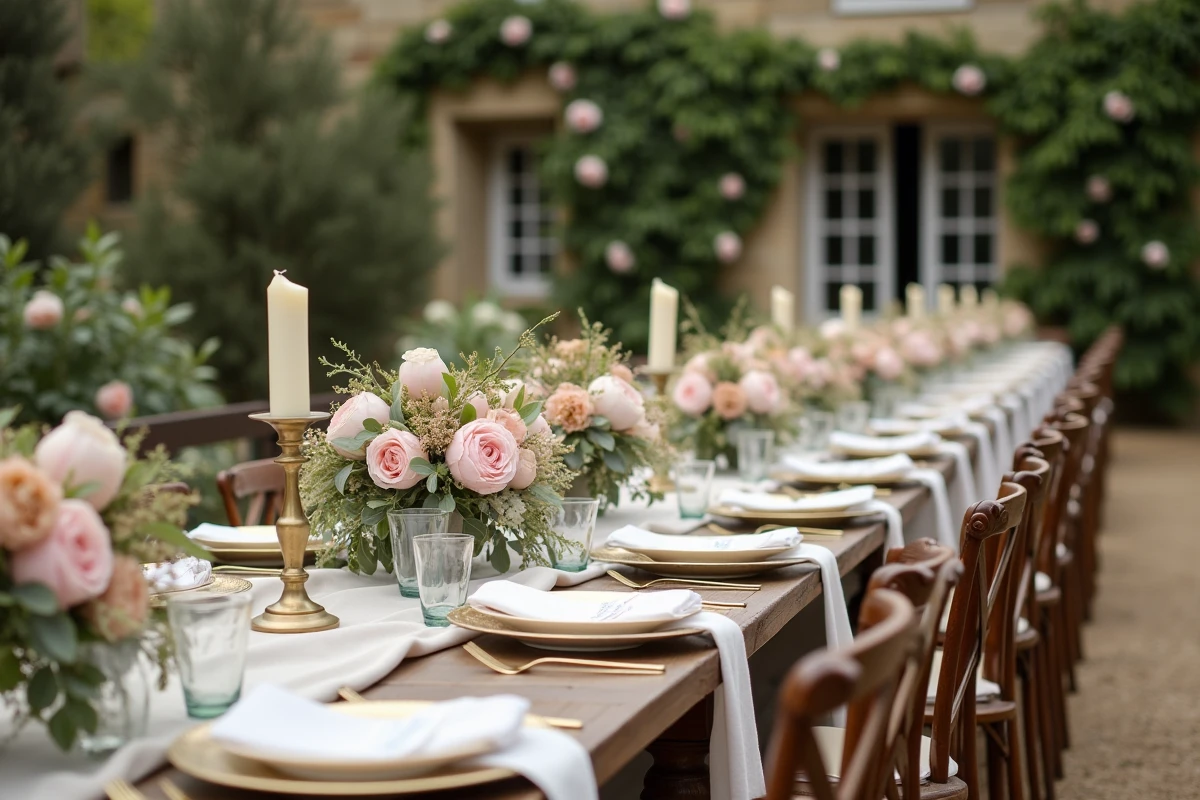
Wedding decoration refers to all the visual and material choices that define the atmosphere of a ceremony and its reception: color palette, materials, plants, lighting, furniture. These choices determine the coherence of the event as well as the overall budget.
Volatility of imported flowers and its impact on wedding floral decoration
Since the end of 2023, fluctuations in maritime transport costs and climate uncertainties in South America and East Africa have caused marked instability in the prices of imported flowers. Ecuadorian roses and off-season peonies are among the varieties most affected.
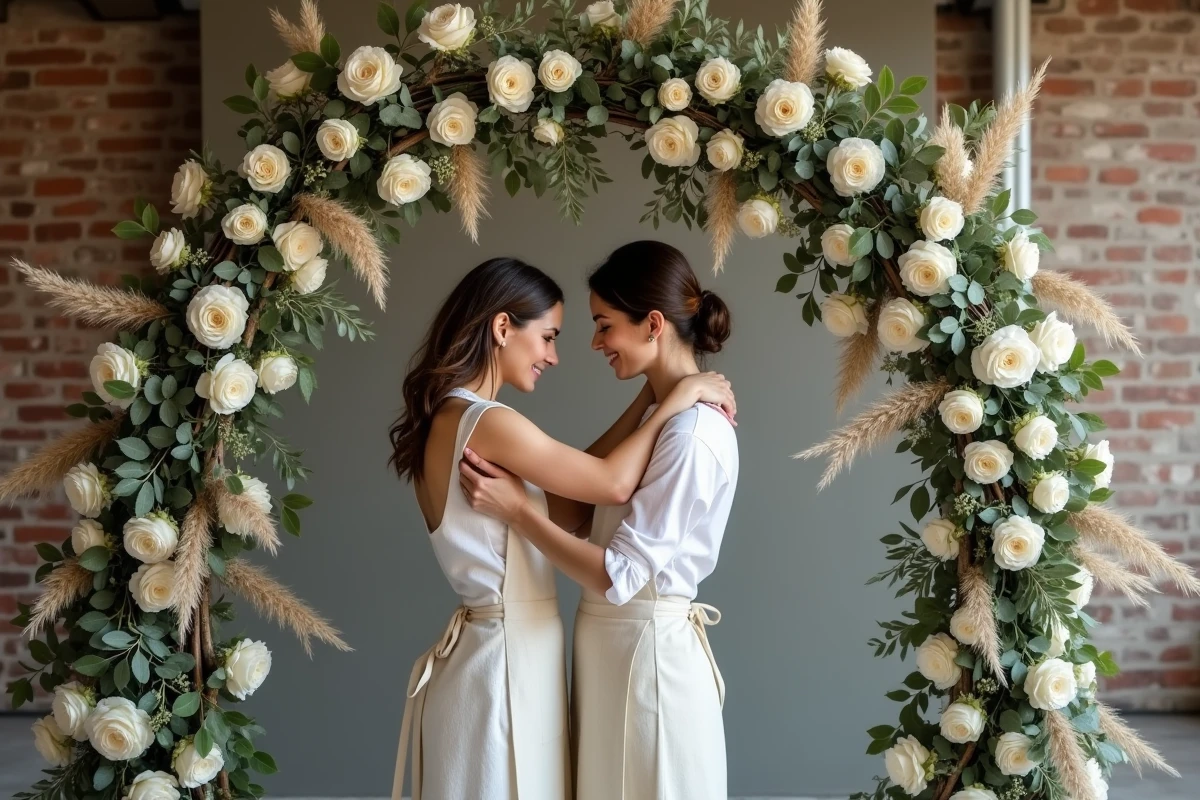
French floral wholesalers interviewed by Le Monde and Le Parisien in 2024 report an unusual volatility in the prices of certain varieties. This context pushes decorators to revise their proposals: more foliage, dried flowers, and local varieties, with a reduction in large-scale installations such as fully flowered arches or floral ceilings.
In practical terms, a couple planning their wedding decoration should discuss available seasonal varieties with their florist early on. Focusing on plants grown in France (dahlias, cosmos, zinnias depending on the season) reduces exposure to logistical fluctuations and often results in a more textured appearance than a classic arrangement of imported roses. Exploring wedding decoration on Mariage et Mariages allows for visualizing these alternatives before meeting with a vendor.
Trendy color palettes and materials for a wedding in 2026
The choice of a coherent color palette structures the entire decoration, from the invitation to the table centerpieces. In 2026, the terracotta and gold trend remains popular, but couples interpret it in a more subdued way than two years ago: a dominant warm tone, a discreet metallic accent, and a neutral (linen, sand, off-white) to balance.
Materials that replace all-floral designs
Velvet is making a strong comeback in wedding decoration, particularly on seating and table runners. This material adds visual depth to a table without multiplying floral arrangements. When paired with artisanal ceramics or raw wood, velvet creates a tactile contrast that photography captures well.
Crumpled linen tablecloths and napkins are gradually replacing synthetic weaves. Their slightly irregular appearance complements natural palettes and reduces the reliance on disposable elements.
Intimate lighting and suspended installations for the reception
Lighting determines the atmosphere perceived by guests more than any other decorative element. Two approaches stand out:
- Warm filament string lights stretched in a canopy above the reception tables, producing a uniform golden light without marked shadow areas.
- Candles grouped at varying heights in blown glass or brass holders, placed on tables and on the ground along the ceremony aisle.
- Suspended installations (vegetal circles, rattan chandeliers, clouds of dried flowers) hung from the ceiling or the structure of a marquee, drawing the eye upward and visually enlarging the space.
Combining two of these three options is enough to transform a reception venue. Layering all three risks overwhelming the decor and complicating the photographer’s work.
Eco-responsible wedding decoration: beyond the symbol
The 2025 Trends Barometer, published by the Federation of Wedding Professionals in February 2025, confirms a clear shift: couples are no longer satisfied with vaguely “green” decor. They demand concrete proof of traceability (labels, rental invoices, origin of flowers) from vendors and integrate decoration into their wedding carbon footprint.
Regulations on single-use items
Several French municipalities have tightened their restrictions on single-use decorations and releases (balloons, lanterns). Before approving a decorative concept, checking the municipal regulations of the reception venue avoids unpleasant surprises on the big day.
Practically speaking, renting furniture and decorative elements replaces purchasing. Removable arches, mismatched stoneware dishes, brass candlesticks: these pieces circulate from one wedding to another and reduce the volume of post-reception waste. Couples who wish to keep a physical memento turn to artisanal stationery (calligraphed menus, painted seating plans) rather than bulky decorative elements.
Personalization of the reception table and details that leave an impression on guests
The table remains the focal point of the reception, where guests spend the most time. Three elements make the difference between a nicely set table and a memorable one:
- A low centerpiece that does not block conversation (lower than a wine glass), made of seasonal plants in an opaque container (ceramics, wood, patinated metal).
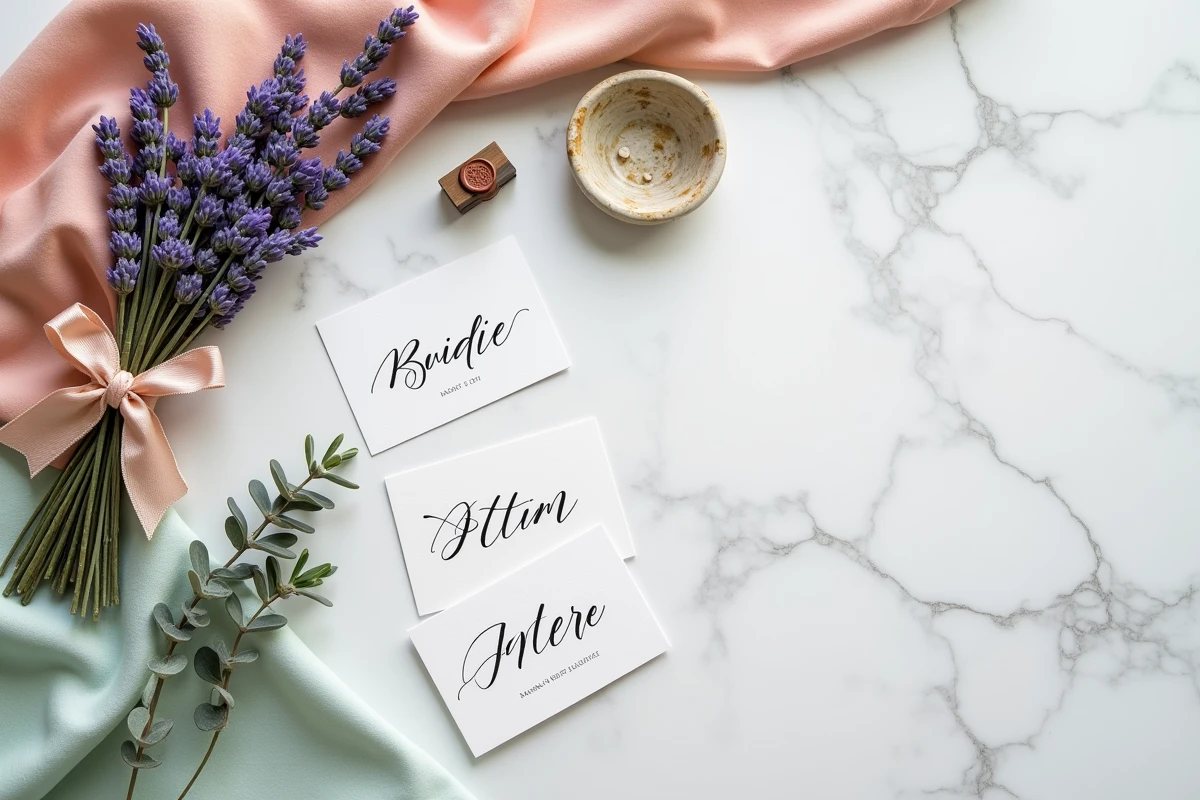
- Elaborate place cards: engraved on pebbles, printed on seeded paper, or calligraphed on an edible item (cookie, fruit).
- A discreet sensory element, such as a sprig of rosemary or lavender slipped into the napkin, adding an olfactory dimension to the decoration.
These details cost little compared to the overall budget but create a disproportionate effect on the memory guests retain of the evening.
The final point to consider is the coherence between the ceremony and the reception. A rustic theme with abundant foliage for the place of worship, followed by a reception hall in a very minimalist style, creates a visual break that photos will make evident. At a minimum, repeating the color palette and a dominant material between the two spaces ensures continuity without imposing an identical decor.