
Yves Rocher occupies a unique position in the French cosmetics market: vertical integration from plant cultivation to point of sale, a dense proprietary network, and an aggressive pricing policy. Analyzing its competitors requires going beyond a simple list of brands to examine the business models that are truly competing for market share.
Integrated model versus digital-first brands: the real competitive divide
The main structural advantage of Yves Rocher remains its complete vertical integration, from the Breton plot to the bottle. No historical competitor replicates this model on the same scale in France.
The brands that are currently nibbling away at its positions do not seek to replicate this model. Typology, Aroma-Zone, or Les Savons de Joya operate on an opposing model: outsourced production, exclusively online distribution, and enhanced formulation transparency. This digital-first positioning allows them to reduce fixed costs associated with a physical network and reinvest in product communication.
When mapping Yves Rocher’s direct competitors, the fault line no longer runs between “natural” and “conventional,” but between integrated distribution and digital agility.
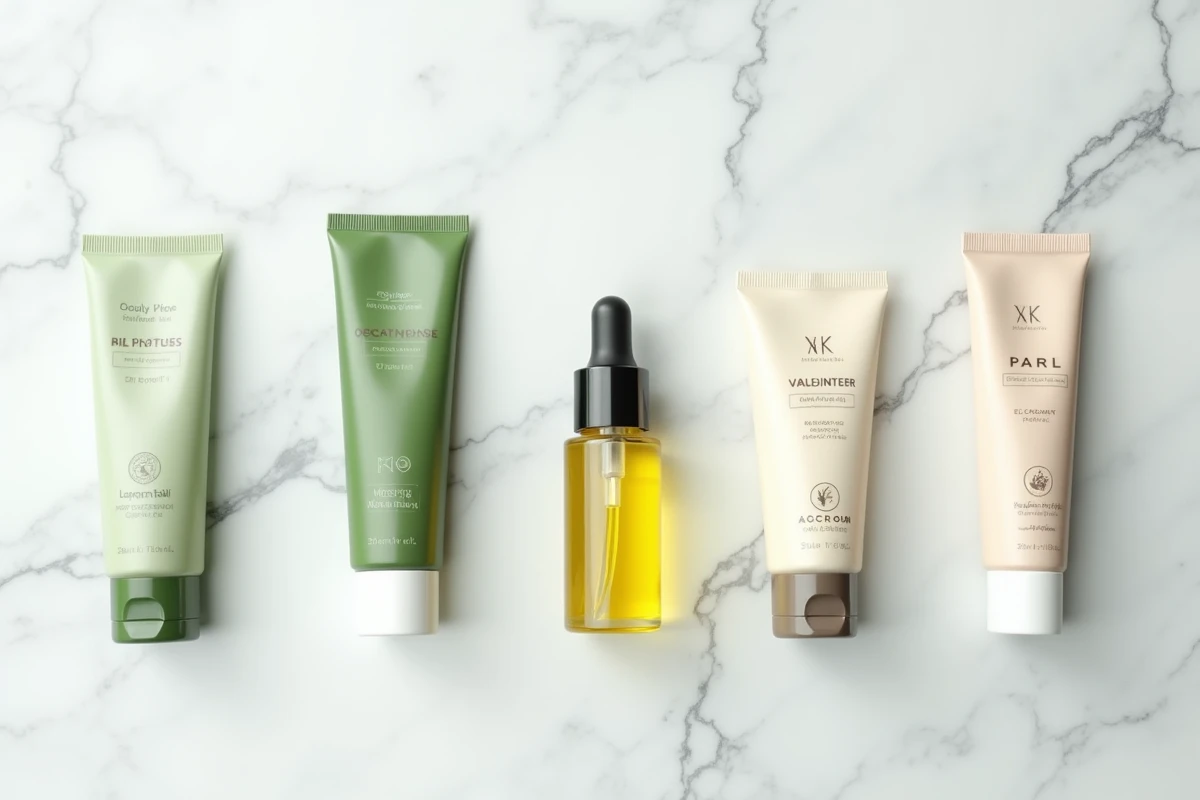
Typology and Aroma-Zone versus Yves Rocher: formulation transparency versus low prices
Typology has set a readability standard that historical brands struggle to match. Each reference displays its commented INCI list, its naturalness score, and the origin of its active ingredients. Yves Rocher communicates about nature, but its transparency regarding formulations lags behind these online-born players.
Aroma-Zone takes this logic further by selling raw materials directly. The consumer becomes the formulator. This model captures a clientele that views Yves Rocher as too industrial, despite its botanical discourse.
In terms of price, Yves Rocher maintains an advantage thanks to its ongoing promotions and loyalty program. Digital-first brands practice stable pricing, often higher per unit, but perceived as more honest by buyers sensitive to greenwashing.
Eco-responsible positioning: refillable packaging and circular economy
Yves Rocher has recently integrated reuse and refillable packaging into its strategy, joining a movement that other major cosmetic brands have also adopted. This shift towards a circular economy meets a measurable expectation from French consumers, particularly in the facial and body care segment.
Several competitors were already occupying this space:
- Lush produces a significant portion of its products without packaging (solid shampoos, naked deodorants) and uses deposit containers in-store
- Aroma-Zone offers reusable containers and refills for its best-sellers, with a zero waste argument central to its marketing
- Typology has reduced its packaging to the strict minimum (glass bottles, recycled cardboard cases) and displays the carbon footprint of its deliveries
The challenge for Yves Rocher is to legitimize this transition with a clientele that still associates the brand with a volume model. Producing millions of units while communicating about waste reduction creates a tension that smaller-scale brands do not have to manage.
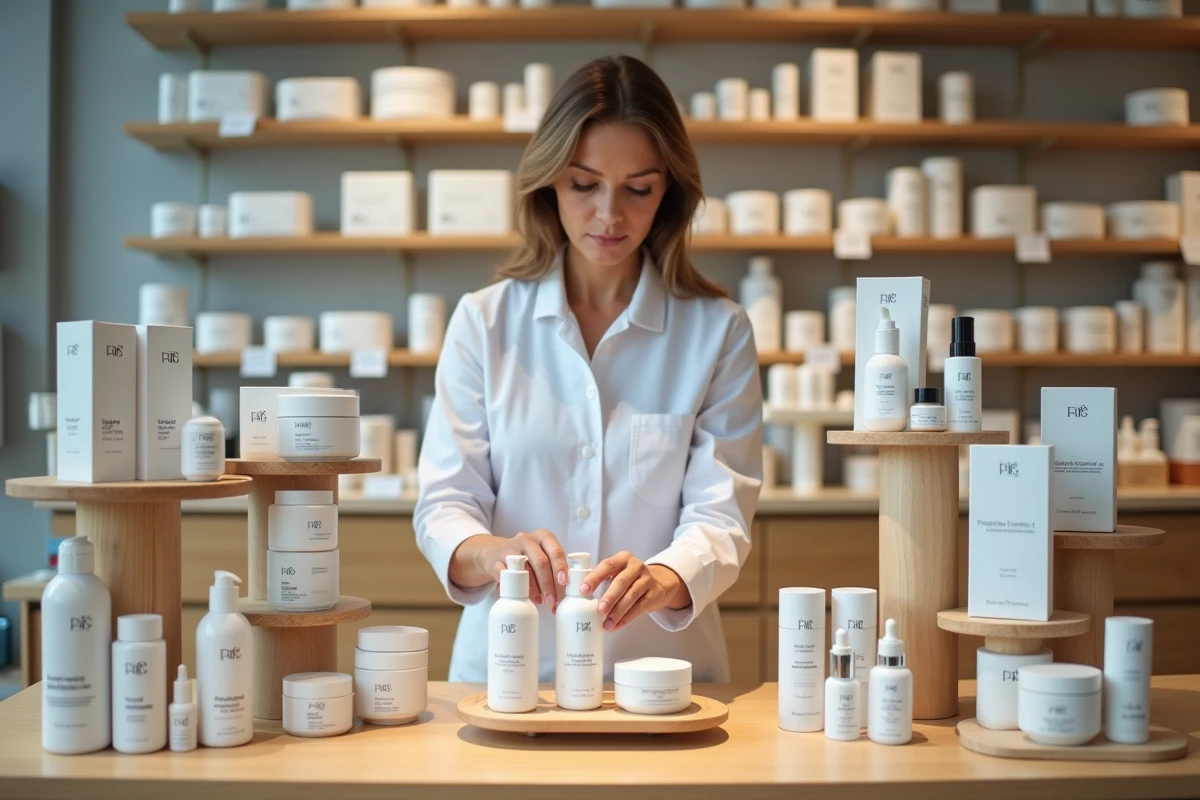
French cosmetics market: where pharmacy brands stand
La Roche-Posay and Avène are not direct competitors of Yves Rocher on paper. Their distribution channel (pharmacies, parapharmacies) and their dermocosmetic positioning place them in a different segment. In practice, these brands capture part of the same clientele, particularly in facial care.
This cohabitation in consumer preferences shows that the choice is not made by channel, but by need: hydration, anti-aging, sun protection.
Pharmacy brands benefit from a trust capital linked to medical endorsement. Yves Rocher, despite its internal laboratories, cannot claim this legitimacy. Its argument remains nature, not dermatological science.
Choice criteria that sway consumers
Several factors explain why a loyal Yves Rocher customer turns to a competitor:
- The perception of a gap between the natural discourse and the reality of INCI lists, pushing towards brands that are more explicit about their compositions
- The online shopping experience, where pure players offer smoother journeys and integrated educational content
- The rejection of the permanent promotional model, perceived by some buyers as a signal of artificially inflated prices
Nuxe and L’Occitane: the premium segment as a glass ceiling
Nuxe and L’Occitane en Provence occupy a niche that Yves Rocher has attempted to approach but has never fully achieved. Yves Rocher’s pricing positioning prevents it from accessing the premium segment without risking destabilizing its customer base.
L’Occitane has built its legitimacy on a Provençal anchoring and selective international distribution. Nuxe capitalizes on the iconic Huile Prodigieuse and a presence in pharmacies that gives it a dual care/beauty status.
These two brands do not directly threaten Yves Rocher’s volume, but they capture customers moving upmarket. When a consumer wants “better” without stepping into luxury, Nuxe or L’Occitane become natural alternatives. Yves Rocher then loses not just a purchase, but an entire cycle of loyalty.
The French cosmetics market is now structured around three forces: integrated players with accessible prices, transparent digital-first brands, and premium brands with territorial anchoring. Yves Rocher must defend its position in the first arena while meeting the standards set by the other two. The rise of refillables and the pressure for formulation transparency make this equation more complex each year.