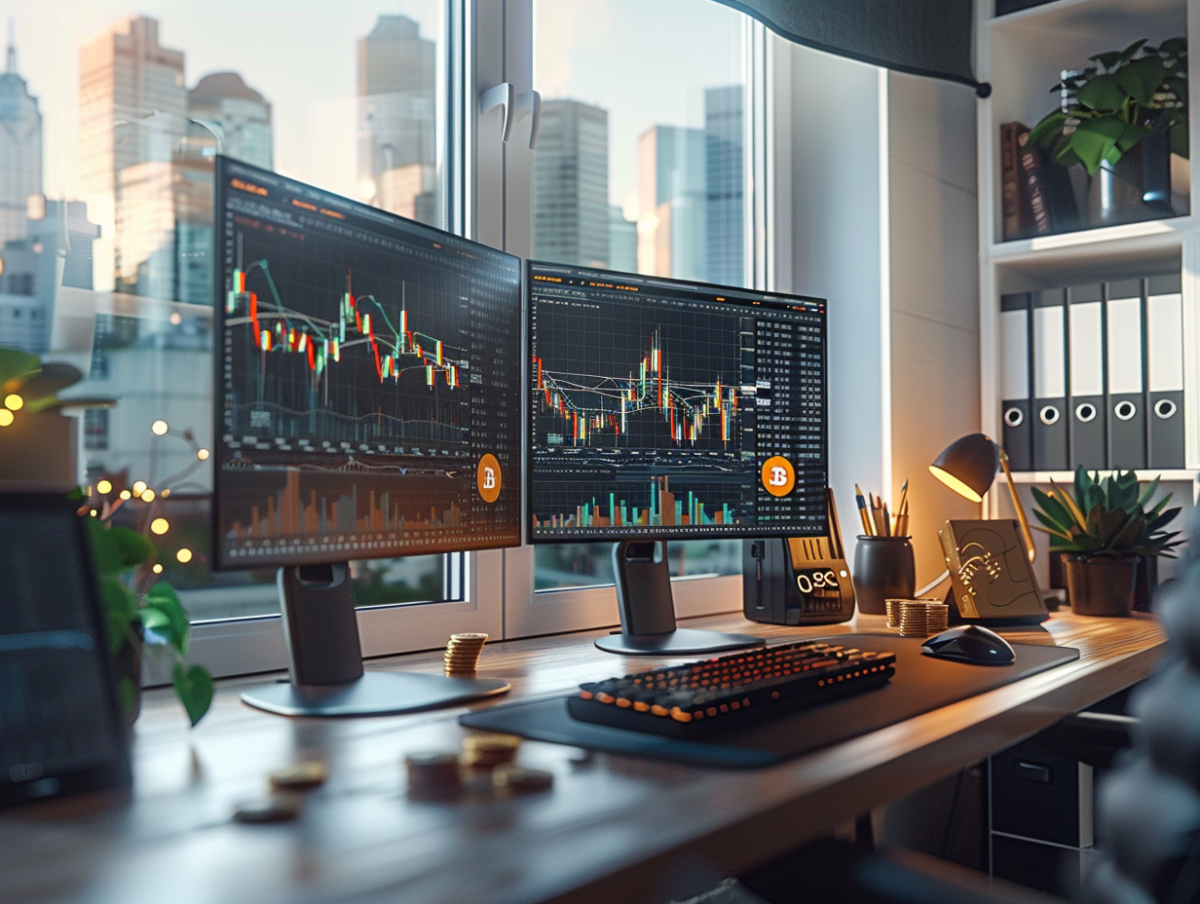
Bitcoin mining, a fundamental process for validating transactions and creating new units of this cryptocurrency, has transformed into a multi-billion dollar industry. In 2022, the appeal of investing in Bitcoin mining persists despite price volatility and rising costs associated with specialized equipment and energy consumption. Miners must constantly assess the profitability of their operations in light of market fluctuations and technological advancements. While some reap substantial profits, others question the long-term viability of this activity in a context of increased competition and environmental concerns.
Bitcoin Mining in 2022: Profitability Analysis
Investing in Bitcoin mining in 2022 raises a central question: is it really profitable? With a reward set at 6.25 bitcoins per mined block, the temptation is great. However, the cost of electricity, a determining factor in this equation, varies significantly from country to country. In France, for example, the financial burden related to energy is such that Bitcoin mining by individuals is almost prohibited. Laurent Pignot, an analyst at Zonebourse, emphasizes that the computing power required and the energy intensity of Asics, machines specialized in Bitcoin mining, place the cost of electricity at the heart of profitability.
The blockchain and the Bitcoin network are constantly evolving, as is the mining difficulty, which adjusts every 2016 blocks. For investors, this implies careful monitoring of the situation and regular updates of their equipment. Asics, while efficient, also signify rapid obsolescence and continuous investments. Looking beyond the simple calculation of immediate profit, taking into account the long term, is therefore essential. Indeed, the volatility of Bitcoin (BTC) can significantly influence the presumed profitability at any given moment of mining.
In this context, the crypto ETF comparison appears as an interesting alternative for investors looking to diversify their portfolios without directly engaging in Bitcoin mining. These exchange-traded funds offer exposure to the cryptocurrency market without the constraints related to the purchase and management of digital assets. The possibility of considering this option should be taken into account, especially for those looking to position themselves in the cryptocurrency market without facing the technical and financial challenges of mining.
Strategies to Optimize Investment in Bitcoin Mining
In the face of market fluctuations and the constant increase in mining difficulty, determining the best optimization strategies for investing in Bitcoin mining becomes a major concern for industry players. Sébastien Gouspillou, head of BigBlock, recommends adopting a methodical approach to reduce costs and maximize gains. One favored method is investing in mining pools, allowing for the pooling of computing resources and sharing of rewards. This pooling, beyond the ability to reduce the variance of gains, offers increased stability in the face of the uncertainty of individual rewards.
In the quest for profitability, the choice of energy supply is also crucial. Gwensas, for example, highlights the use of green energy sources to power its mining operations. This strategy, far from being a mere ethical stance, represents a significant economic advantage in the long term, anticipating potential environmental regulations and reducing energy costs. A wise investment in environmentally responsible infrastructure could therefore prove to be less expensive and more sustainable.
The landscape of Bitcoin mining is evolving, with players like Feel Mining offering individuals turnkey solutions to engage in mining activities. This offer, tailored for non-experts, democratizes access to mining while providing a service that manages the technical and logistical complexities. Conversely, specialized companies like Just Mining are shifting their strategy towards more institutional services, recognizing the limitations of the individual approach in the face of intensified competition and the growing demand for performance. Individuals, like Léo working in a French startup, can thus benefit from professional expertise to manage their digital assets and optimize their mining returns.