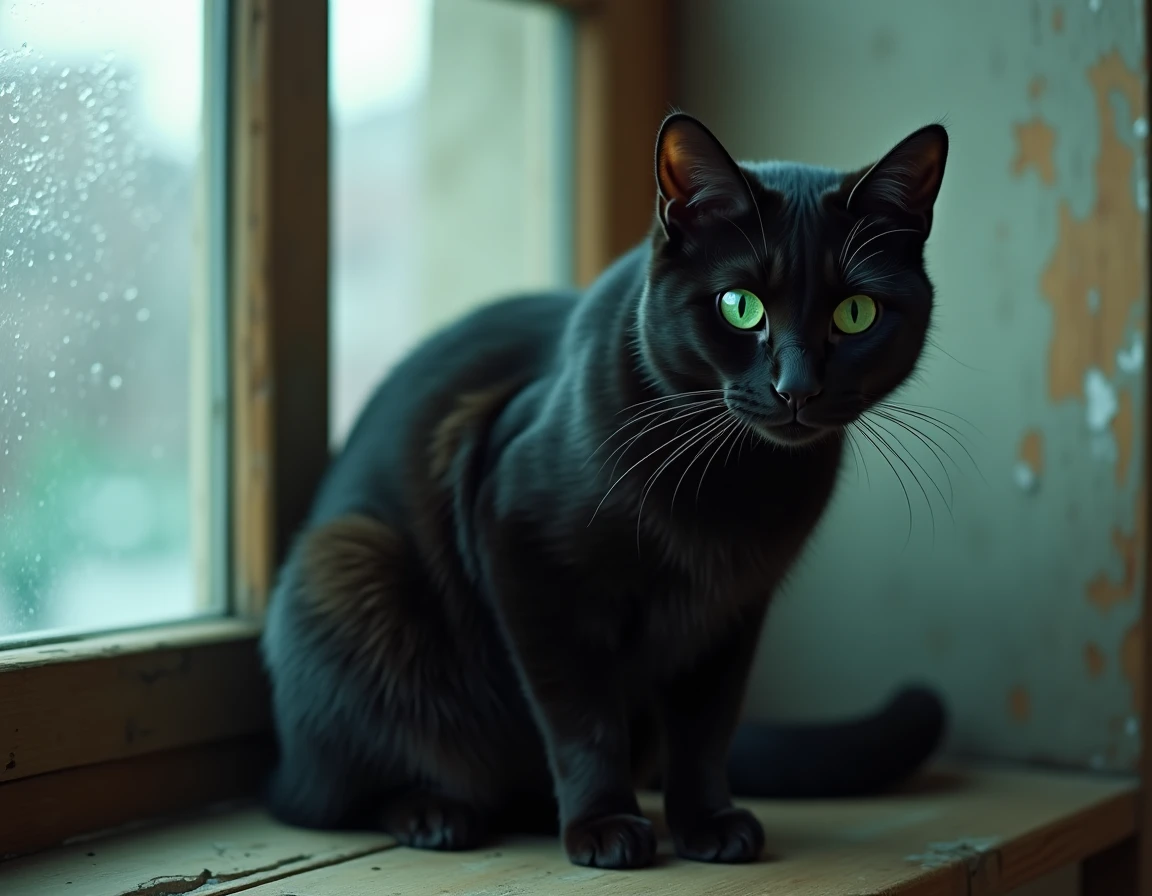
A black cat crosses a room, and it is its green eyes that catch the gaze first. This contrast between a coat that absorbs light and an almost fluorescent iris provokes an immediate visual reaction, well before any consideration of the animal’s breed or character. This fascination is found among adopters, wildlife photographers, and owners who share very contrasting portraits of their feline on social media.
Green Eye Color in Black Cats: What the Physiology of the Iris Says
The color of a cat’s eyes does not depend on the same mechanisms as that of its coat. Understanding this distinction directly illuminates why the contrast is so striking in a black cat with green eyes.
The green hue of the eyes depends on the amount and distribution of melanin in the stroma of the iris, a process distinct from that which colors the fur. Thus, a cat with an intense black coat can have very bright green, yellow, or copper eyes, depending on the pigment concentration in the iris. The American College of Veterinary Ophthalmologists specifies that the melanin in the iris and that in the coat obey separate mechanisms.
This pigmentary shift produces a visual effect that does not exist in lighter coats. On a gray or red coat, green eyes attract attention, but the contrast remains moderate. Against a matte black background, the green iris appears almost bioluminescent. This is a real optical effect, not a subjective impression: the contrast between black fur and green iris amplifies human perception of brightness, as noted by the International Society of Feline Medicine.
From this, we better understand why the beauty of the black cat with green eyes generates so much fascination: it is based on a measurable physiological phenomenon, not solely on aesthetic feeling.
Breeds of Black Cats with Green Eyes: Which Lines Favor This Contrast
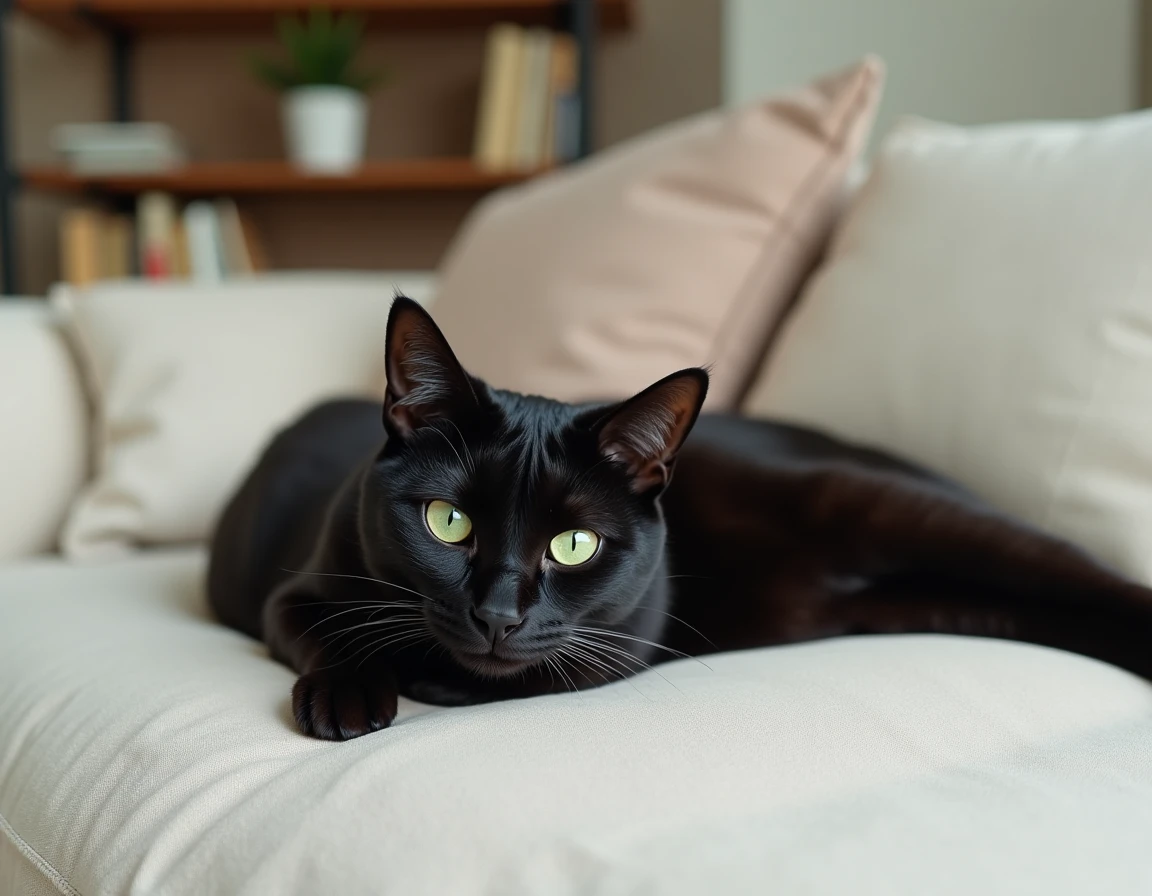
Not all black cats have green eyes. In some breeds, the combination of black coat and green iris is common, sometimes even sought after by breeders. In others, copper or golden eyes are more typical.
- The Bombay, often nicknamed “miniature panther,” has a jet-black coat, but its eyes are generally copper or golden, rarely green. The breed standard actually favors warm shades for the iris.
- The black British Shorthair can develop intense green eyes, although copper remains common in this breed. Lines with green irises are prized by enthusiasts of marked contrasts.
- The black domestic cat, without pedigree, is the most represented among black cats with green eyes. The genetic diversity of these felines promotes a wide range of iris colors, and green appears regularly.
In practice, when looking for a black cat with green eyes for adoption, cats without pedigree offer the best chances of finding this combination. Standardized breeds often steer selection towards other eye colors.
Black Cats and Social Media: How Photography Changes Perception
A black cat is notoriously difficult to photograph. Smartphone sensors saturate dark areas, and the fur loses its highlights in favor of a uniform mass. Green eyes, on the other hand, stand out with striking clarity in these same shots.
This technical imbalance has produced a recognizable photographic style: black background, bright iris, very few intermediate details. This type of image performs well on Instagram and TikTok, where rapid scrolling favors high-contrast visuals.
According to the RSPCA in the UK, the positive media coverage of black cats on social media has helped improve their attractiveness to younger adopters since the early 2020s. Accounts of “catfluencers” with green eyes accumulate significant audiences, and several British shelters have noted a direct effect on adoption requests.
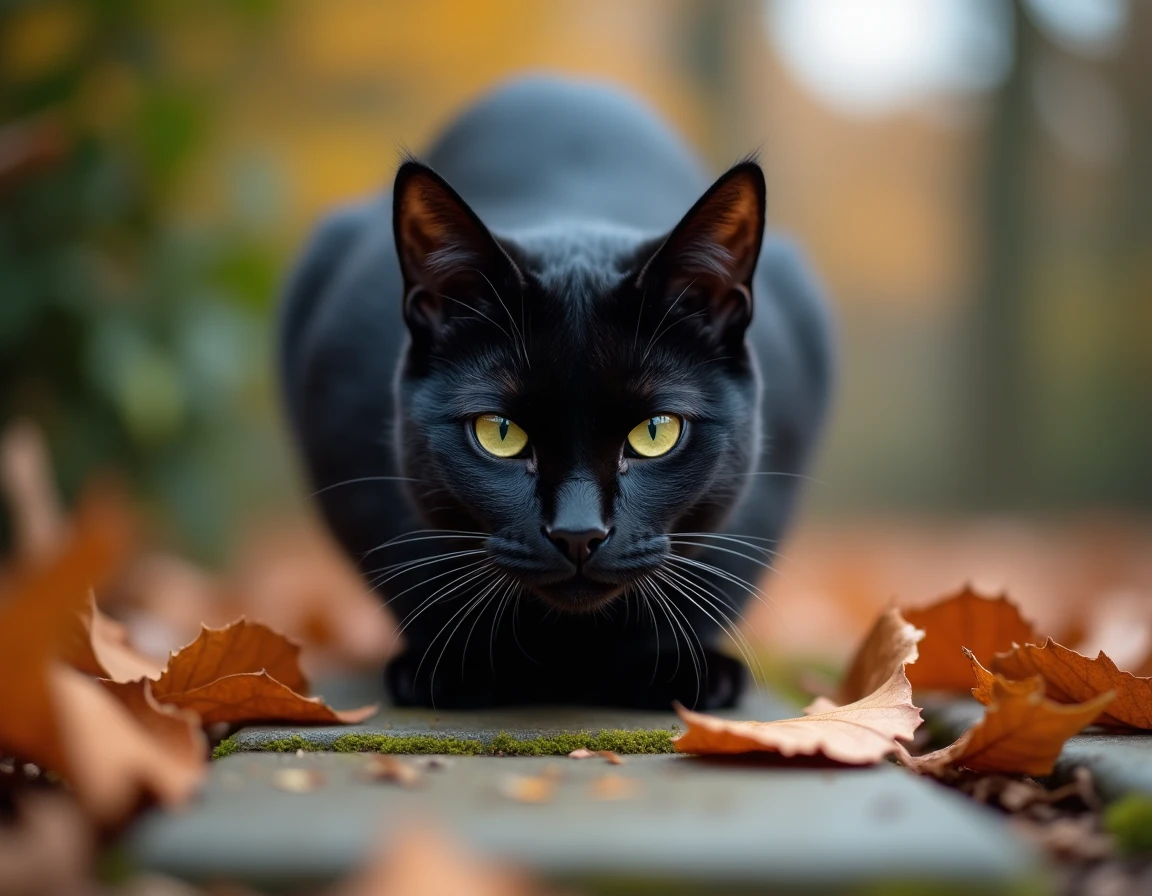
Feedback varies on this point among French shelters, where the black cat generally takes longer to place than other coat colors. The effect of social media is not enough to erase decades of superstition, but it creates a visual counterculture that is gaining ground.
Superstitions and Adoption: A Slowly Receding Barrier
In France, the superstition associating black cats with bad luck persists in some regions, even though it is weakening among connected generations. In the UK, the dynamic is the opposite: the black cat is traditionally considered a bringer of good luck.
This cultural gap is reflected in adoption timelines. French associations report that black cats remain among the last to be adopted from shelters, across all age groups. The dark fur also makes the animal less “photogenic” in classic adoption ads, which exacerbates the problem.
The irony is that the same characteristics that hinder adoption in shelters (dark fur, difficulty in photographing) become assets on social media when one masters lighting and framing. A well-photographed black cat with green eyes captures more attention than a tricolor cat under the same conditions.
Behavior of the Black Cat: Temperament and Daily Life
It is often said that black cats are more affectionate or playful than others. No serious veterinary study confirms a link between coat color and temperament. The melanin that colors the fur does not influence the nervous system.
What changes, however, is the relationship that the owner builds with the animal. A black cat adopted with awareness, chosen for its gaze or coat, often receives special attention from its adopter. The attachment to the cat’s unique appearance strengthens the emotional bond, not the other way around.
In daily life, a black cat with green eyes requires the same care as any other feline: appropriate diet, stimulation, veterinary follow-up. Black fur is also less visible on dark clothing and furniture, a detail that owners of white or red cats would appreciate.
The fascination for the black cat with green eyes lies in a simple sequence: a real physiological contrast, amplified by digital photography, supported by a visual culture that values graphic minimalism. What was once rooted in superstition is gradually giving way to an appreciation based on aesthetics and physiology.