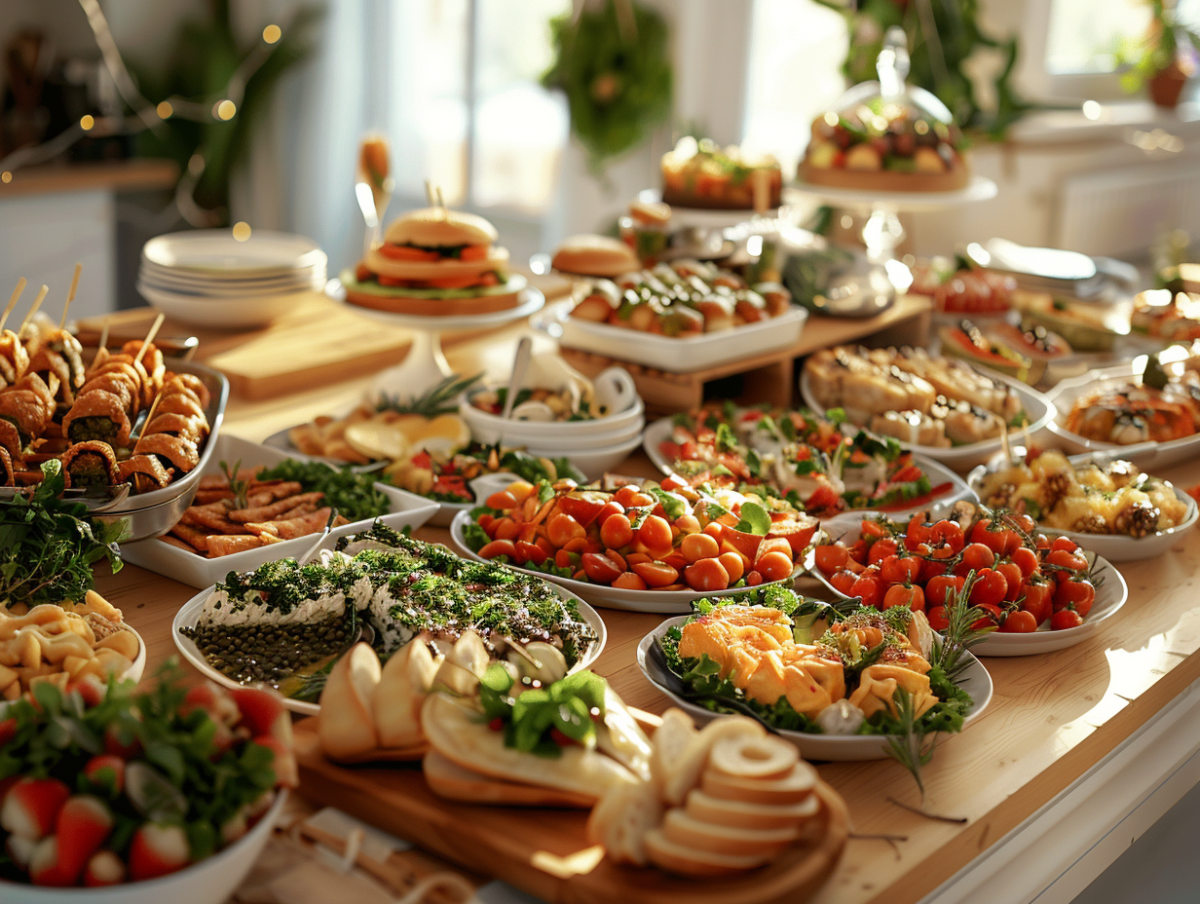
Organizing a meal for a large gathering can prove to be a significant logistical challenge, especially when it comes to portioning adequately to satisfy all guests. Between varied appetites and multiple dietary preferences, you must find the right balance to avoid waste while ensuring that no one leaves hungry. Fortunately, there are proven strategies to estimate the necessary quantities, compose a balanced menu, and effectively manage leftovers. This can include formulas based on the number of guests, calculations per head, or tips for adjusting recipes accordingly.
Assessing Needs: Calculating Portions According to the Type of Event and Guest Profile
When planning a buffet or a cocktail dinner, estimating the amount of food per person becomes a delicate operation that requires considering the nature of the event and the eating habits of the guests. For items like charcuterie and cheese, standards such as 250 g of charcuterie and 200 g of cheese per guest provide a solid foundation. For drinks, consider 3 to 4 glasses of wine per person and one bottle of non-alcoholic beverage for three to four people. These benchmarks can be adjusted based on the time of day, the duration of the event, and the profile of the guests.
The dietary preferences of guests also influence portions. A young and active audience might favor a higher consumption of energy drinks, while a gathering with refined tastes might prefer a greater variety of wines and cheeses. As for the amount of rice per person, it will vary depending on the type of dish served and its place in the menu. If rice is the main accompaniment to a saucy dish, plan for about 60 to 70 g per guest, while for a central dish like risotto, this amount can go up to 100 g.
To reduce food waste, adjust these standards based on the duration of the event and feedback from previous experiences. A buffet that stretches over several hours will require upward adjustments to account for the growing appetites of guests over time. Also, plan for variations for guests with specific diets such as vegetarian, gluten-free, or allergies to ensure that everyone finds satisfaction without exceeding overall portions. These practical considerations, when implemented wisely, allow for a harmonious meal where the pleasure of the table aligns with resource management.
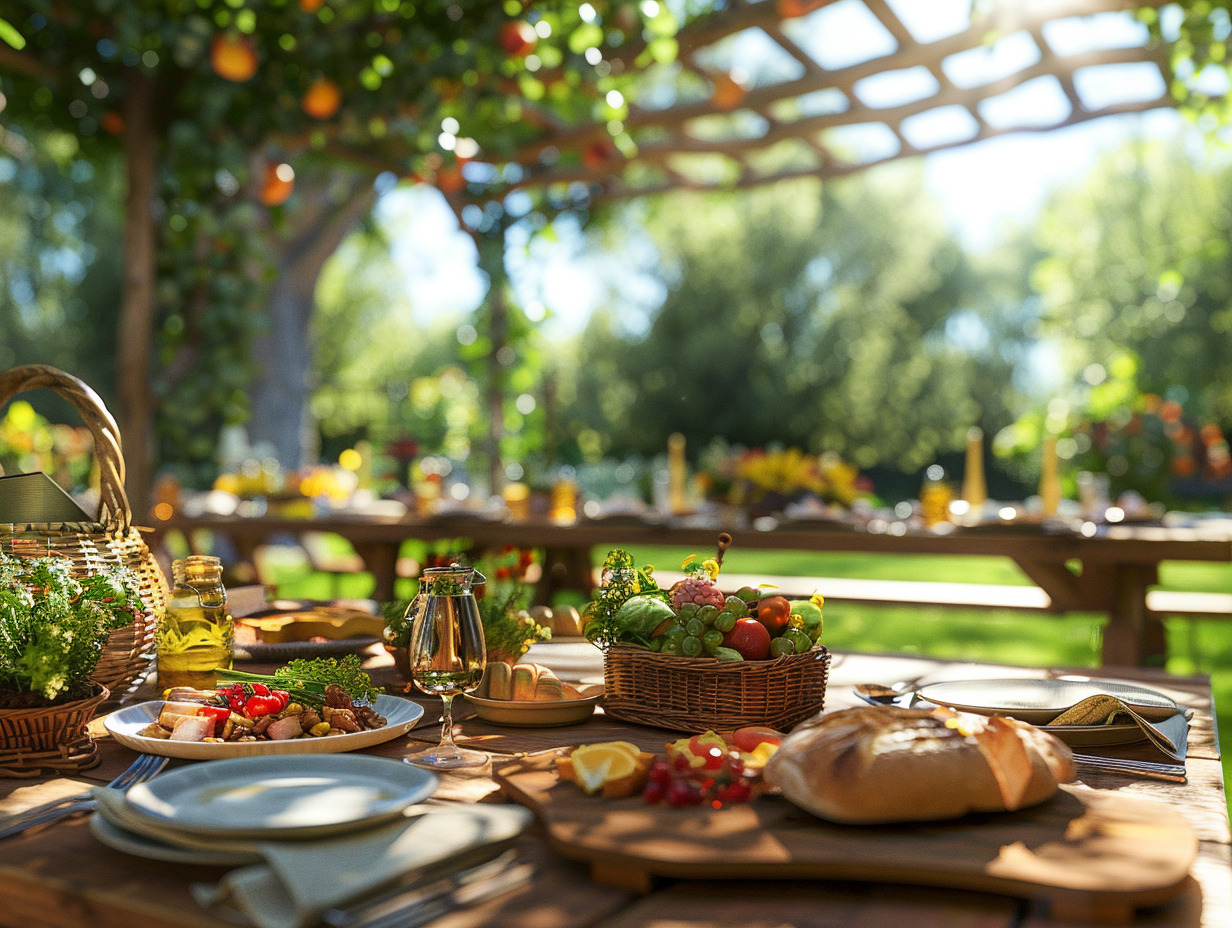
Practical Tips for Serving the Right Amount: Tricks and Methods to Avoid Waste
Thinking in terms of quantity and precision is fundamental to avoid food waste and serve meals tailored to actual needs. Maison Boudet, known for its balanced buffets, employs effective methods to size portions. It particularly recommends defining a standard quantity per dish, which can be slightly adjusted based on feedback and consumption observed during previous receptions. Technical sheets for each recipe, with detailed proportions for ingredients, allow cooks to reproduce exactly the same portions at each event.
The use of standardized serving dishes proves to be a valuable tool for event organizers. These dishes, used consistently, provide a visual consistency for guests and facilitate serving in measured quantities. For fruits and vegetables, pre-determined cuts ensure that each guest receives a homogeneous portion, which contributes to better stock management and reduction of surplus.
Fluid communication between the kitchen and service is essential. Servers, informed of the exact quantities to serve, can adjust portions in real-time according to guest flow and appetite. Maison Boudet encourages continuous assessment during the event, allowing for adjustments to the offerings based on specific requests without exceeding needs. This dynamic method ensures not only guest satisfaction but also rigorous food management, a cornerstone of a successful event marked by environmental responsibility.